
As an important part of the feed system, different types of machine tools have different requirements for the guide rail. The common guide forms of machine tools are sliding guide, rolling guide and hydrostatic guide.
Sliding guide rail: sliding guide rail has the advantages of simple structure, convenient manufacture, good rigidity and strong shock resistance, and is widely used in general machine tools, and is often made of cast iron or steel-embedded guide rail. In order to improve the wear resistance and accuracy of the guide rail, the surface of the guide rail is generally quenched and then ground.
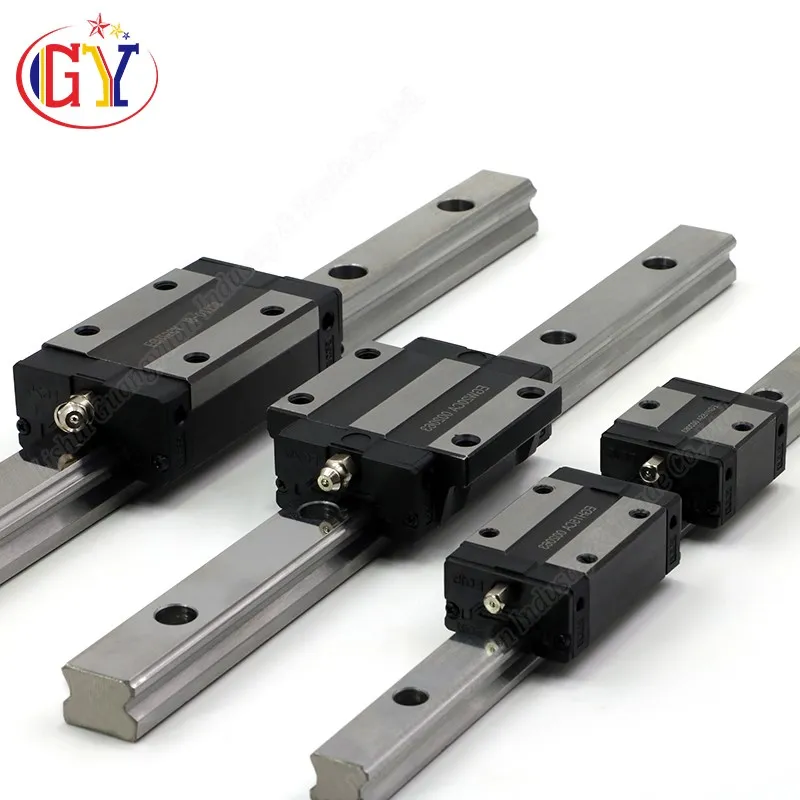
Rolling guide rail: rolling guide is to install rolling elements between the working surfaces of the guide. The rolling elements can be balls, rollers and needle rollers, and the contact with the guide is point contact or line contact, so the friction coefficient of the guide is small. The static and dynamic friction coefficients are basically the same, the starting resistance is small, the low-speed motion is smooth, the positioning accuracy is high, the micro-displacement is accurate, the wear is small, the accuracy is maintained well, and the service life is long.
Hydraulic guide rail: the hydraulic guide rail used on the machine tool is mainly a hydrostatic guide rail. Hydrostatic guide rails usually introduce pressure oil between two relatively moving guide rail surfaces to float the moving parts. The oil pressure can be automatically adjusted with the change of external load to ensure that the guide surfaces of the quantitative feeder are always in a pure liquid friction state, so the friction coefficient of the hydraulic guide rail is small and the power consumption is small. This kind of guide rail is not easy to wear, and it has good accuracy retention and long service life.
Whatsapp/wechat:17769815516
Email:admin@gyballscrew.com
gykristyliu@gmail.com


